
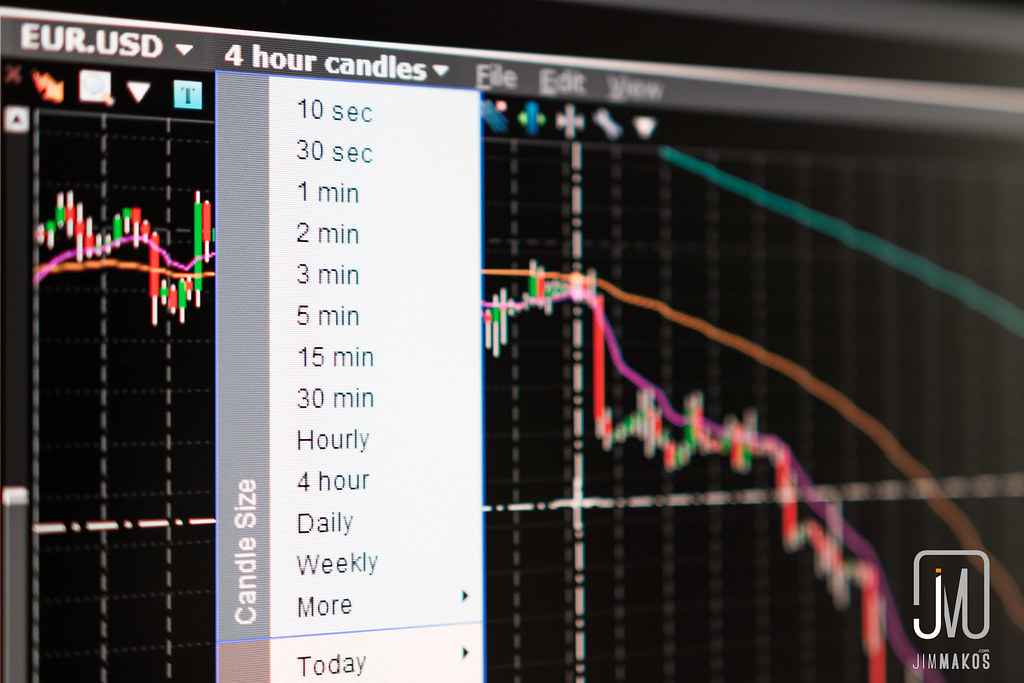
The foreign exchange market — commonly called forex or FX — is the largest and most liquid financial market in the world, with trillions of dollars changing hands every day. Yet for newcomers it can feel opaque. This beginner’s guide explains how the forex market works in plain language: what currency pairs are, how pips and spreads function, what moves exchange rates, and why leverage makes forex both accessible and genuinely risky.
Our aim is to build a clear foundation, not to encourage trading. Forex is a serious, high-risk activity, and understanding the mechanics is the first step toward making informed decisions — including the decision of whether to participate at all.
What Is the Forex Market?
The forex market is where currencies are bought and sold. Unlike a stock exchange, it has no single central location; instead, it operates as a global network of banks, institutions, brokers, and individuals trading electronically. It runs 24 hours a day, five days a week, following the business hours of major financial centers around the world. This decentralized, around-the-clock structure is part of what gives forex its enormous liquidity.
Most currency trading serves practical purposes — international trade, tourism, and hedging by businesses. Speculation, where participants try to profit from price movements, is only one part of a much larger system.
How Currency Pairs Work
Currencies are always traded in pairs, because buying one currency means selling another. A quote like EUR/USD = 1.08 tells you how much of the second currency is needed to buy one unit of the first.
Base and Quote Currency
In any pair, the first currency is the base and the second is the quote. In EUR/USD, the euro is the base and the US dollar is the quote. If the price rises, the base currency is strengthening relative to the quote; if it falls, the base is weakening. Reading a pair correctly is the foundation of understanding every forex quote.
Majors, Minors and Exotics
Pairs are grouped by liquidity. “Majors” involve the most traded currencies, typically paired with the US dollar, and tend to have tight spreads and high liquidity. “Minors” are pairs of major currencies that exclude the dollar. “Exotics” combine a major currency with one from a smaller or emerging economy; they are less liquid, more volatile, and usually carry wider spreads and higher risk.
Pips, Spreads and Lots Explained
A few units of measurement make forex prices concrete. A “pip” is the smallest standard price increment for most pairs, usually the fourth decimal place. When a pair moves from 1.0800 to 1.0801, that is one pip.
The “spread” is the difference between the buying (ask) and selling (bid) price. It represents a cost of trading and effectively means a position starts slightly negative. A “lot” is a standardized trade size; smaller lot sizes let beginners trade with less capital and risk. Understanding how pips, spreads, and lot sizes interact is essential to grasping how gains and losses accumulate.
What Moves Exchange Rates
Exchange rates reflect the relative supply and demand for currencies, driven by a range of interconnected factors. Understanding these helps explain why prices move, even if predicting them remains notoriously difficult.
- Interest rates: Higher rates can attract capital and strengthen a currency, while rate cuts can weaken it.
- Economic data: Inflation, employment, and growth figures shape expectations about a currency’s direction.
- Central bank policy: Statements and decisions from central banks are among the most powerful drivers of currency moves.
- Geopolitics and risk sentiment: Political events and global uncertainty can shift demand toward perceived safe-haven currencies.
- Trade and capital flows: A country’s balance of trade and investment flows affect demand for its currency.
Leverage and Margin: Opportunity and Danger
Forex is often traded with leverage, meaning a small deposit (margin) controls a much larger position. Leverage is what allows individuals to participate with modest capital — and it is also what makes forex so risky. Because currency moves are usually small in percentage terms, leverage is used to amplify them, which amplifies both gains and losses. A small adverse move can erase a margin deposit quickly, and in some accounts losses can exceed the amount deposited. Treating leverage with caution is one of the most important habits a beginner can develop.
Risks Beginners Should Understand
Forex’s accessibility can mask its difficulty. Many retail participants lose money, and the combination of leverage, fast price action, and round-the-clock trading can punish poor risk management. Beginners should be aware of volatility, the cost of spreads and overnight financing, the emotional pressure of leveraged positions, and the prevalence of misleading marketing that downplays risk. A realistic mindset — treating forex as difficult and risky rather than as easy income — is itself a form of protection.
Frequently Asked Questions
What is forex trading in simple terms?
Forex trading is buying one currency while simultaneously selling another, aiming to benefit from changes in their relative value. Currencies are always quoted and traded in pairs.
Is forex trading suitable for beginners?
Forex is accessible but high-risk, and many beginners lose money. If you choose to learn, start with education, a demo account, minimal or no leverage, and only money you can afford to lose.
What is a pip?
A pip is the smallest standard price movement in most currency pairs, usually the fourth decimal place. It is the basic unit used to measure gains and losses in forex.
Why is forex traded with leverage?
Because currency moves are typically small in percentage terms, leverage is used to amplify them. This increases potential gains but equally increases potential losses, making it a significant source of risk.
When is the forex market open?
The forex market operates 24 hours a day, five days a week, following the trading sessions of major financial centers worldwide. Liquidity varies by session and currency pair.
What determines a currency’s value?
A currency’s value reflects supply and demand, shaped by interest rates, economic data, central bank policy, trade flows, and geopolitical events. These factors interact in complex and often unpredictable ways.
Summary
The forex market is a vast, decentralized system where currencies are traded in pairs around the clock. Understanding base and quote currencies, pips and spreads, the drivers of exchange rates, and especially the double-edged nature of leverage gives you a solid foundation. That foundation matters because forex is genuinely difficult and risky — knowledge is what separates informed participation from costly guesswork. If you want to learn more, continue with reputable educational resources and practice on a demo before risking real capital.
Related Articles
- Risk Management in Trading and Investing: A Practical Guide
- Stocks vs ETFs: Which Is Better for Long-Term Investing?
- How to Build an Emergency Fund and Budget That Lasts
Disclaimer
This article is for educational and informational purposes only and does not constitute investment, financial, legal, or tax advice. It is general in nature and does not account for your personal circumstances. Forex trading involves substantial risk, including the use of leverage that can magnify losses; you may lose some or all of your capital, and in certain cases more than your initial deposit. A high proportion of retail traders lose money trading these products. Past performance does not guarantee future results. Always conduct your own research and consider consulting a licensed, independent financial professional before making any trading decision.

 English
  German
  Polish
  French
  German (Switzerland)
  Croatian
  Czech
Czech  Italian
  Spanish
  Swedish
  Portuguese (Portugal)
  Portuguese (Brazil)
  Japanese
  Thai
Thai  Danish